Pan Seared Filet Mignon
Highlighted under: Comfort Food Heritage
I absolutely love cooking pan seared filet mignon because it transforms a meager piece of meat into a luxurious dining experience. The flavors that develop from searing create a wonderful crust, locking in all the juices for a tender and flavorful bite. My favorite method involves a cast iron skillet, which not only retains heat well but also distributes it evenly. Pairing it with a simple herb butter elevates this dish to a whole new level, and it always impresses my guests!
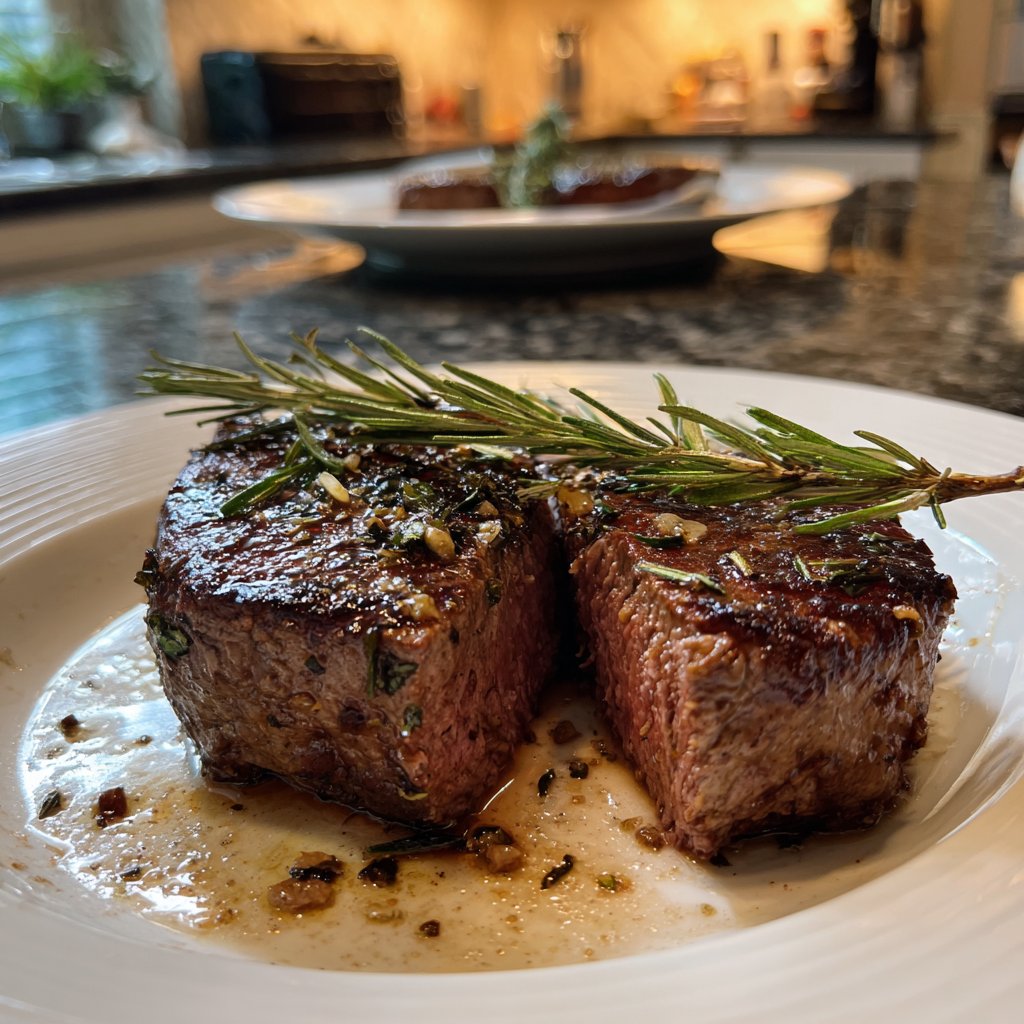
When I first attempted making filet mignon at home, I was intimidated, but I quickly learned that with the right technique, it can be incredibly simple. The secret lies in the sear; getting your skillet hot enough is essential for that perfect crust, and I like to finish the steak in the oven for even cooking. I once cooked this for a special occasion and the compliments just kept coming!
On a recent try, I opted for a blend of shallots and garlic in my butter towards the end of cooking, and the aromas were heavenly. It's little tweaks like this that can transport your dish from ordinary to extraordinary. I highly recommend using a meat thermometer to get your desired doneness spot on—it's a game changer!
Why You'll Love This Recipe
- Rich, buttery flavor that melts in your mouth
- Perfectly seared crust with a tender, juicy center
- Elevates any dinner occasion with minimal effort
The Role of Herbs and Aromatics
Adding fresh herbs like thyme is a simple yet impactful way to elevate the flavor of your filet mignon. Thyme releases a subtle earthy aroma and a hint of pepperiness as it cooks. You can also experiment with other herbs such as rosemary or even a dash of smoked paprika for a unique twist. While cooking, the aromatic oils infuse the butter and steak, enriching the overall taste without overwhelming the natural flavors of the meat.
Garlic, included in this recipe, plays an essential role as well. Smashed garlic cloves become fragrant and mellow as they cook in the butter. They lend a rich, savory note that complements the filet's buttery profile. Be careful not to let the garlic burn, which would impart bitterness; keeping the heat moderate during the basting step is vital for achieving the right balance.
Perfecting the Sear
Achieving a perfect sear is key to a successful filet mignon. The hallmark of a good sear is a deep golden-brown crust, which comes from the Maillard reaction—a chemical reaction that occurs when proteins and sugars in the meat are exposed to high heat. Make sure your cast iron skillet is properly preheated; it should be hot enough that the oil shimmers but does not smoke when you add the steaks.
When you place the steaks in the skillet, refrain from moving them for at least 3-4 minutes. This undisturbed cooking allows the crust to form. You can check for doneness by gently lifting a corner of the steak; if it releases easily without sticking, it’s ready to flip. Avoid overcrowding the skillet, as this can drop the temperature and prevent proper searing.
Storing and Reheating Leftovers
If you find yourself with leftover filet mignon, store it in an airtight container in the refrigerator for up to three days. To retain its signature juicy texture, consider slicing the steak against the grain before refrigerating. This makes it easier to eat when you reheat it and allows for more even warming throughout the meat.
To reheat, use a low and slow method to prevent the steak from drying out. I recommend preheating your oven to 250°F (121°C) and placing the sliced steak on a baking sheet. Cover it with aluminum foil to retain moisture. Heat for about 15-20 minutes, or until warmed through. Alternatively, you can return the slices to a skillet with a bit of butter over low heat, basting gently until reheated.
Ingredients
Gather the following ingredients to create a delicious pan seared filet mignon:
Ingredients
- 2 filet mignon steaks, about 1.5 inches thick
- Salt and pepper, to taste
- 2 tablespoons vegetable oil
- 2 tablespoons unsalted butter
- 2 cloves garlic, smashed
- 2 sprigs fresh thyme (optional)
Instructions
Follow these steps carefully to achieve the perfect pan seared filet mignon:
Prepare the Steaks
Remove the filet mignon from the refrigerator and let it come to room temperature for about 30 minutes. Pat the steaks dry with paper towels and season generously with salt and pepper.
Heat the Skillet
In a cast iron skillet, heat the vegetable oil over medium-high heat until it's shimmering. Ensure the skillet is really hot to get a good sear.
Sear the Steaks
Carefully place the steaks in the skillet and do not move them for about 3-4 minutes. Flip them over when a beautiful brown crust forms.
Baste with Butter
After flipping the steaks, add the butter, garlic, and thyme to the skillet. Use a spoon to baste the steaks with the melted butter. Cook for an additional 3-4 minutes for medium-rare.
Rest the Steaks
Remove the steaks from the skillet and allow them to rest for 5 minutes. This helps the juices redistribute.
Serve
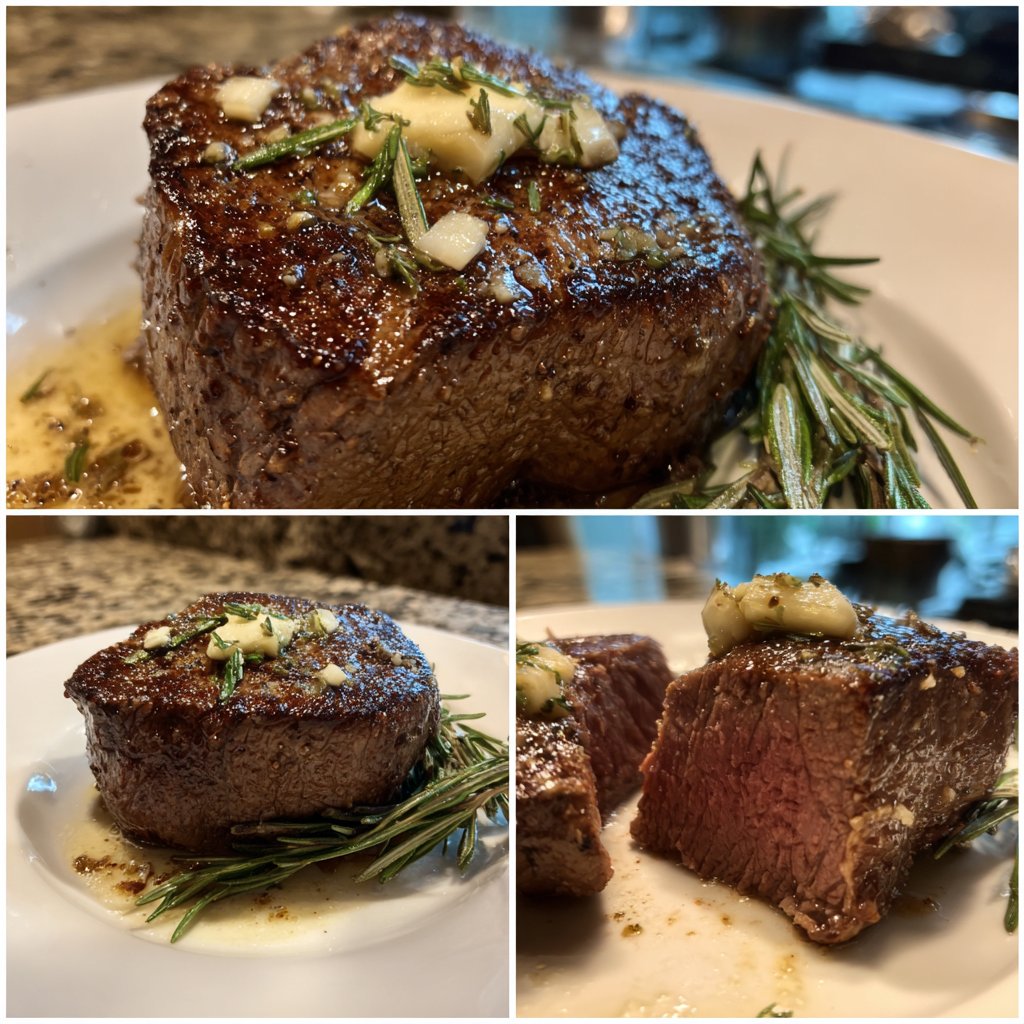
Slice against the grain and serve with drizzled herb butter on top or as desired.
Pro Tips
- Always use a meat thermometer to get the desired doneness: 120°F for rare, 130°F for medium-rare, 140°F for medium.
Serving Suggestions
To complement your pan-seared filet mignon, consider simple sides that highlight its rich flavor. Roasted vegetables, such as asparagus or Brussels sprouts, add a colorful element and a touch of earthiness. A creamy mashed potato or a hearty grain like farro can create a satisfying base that pairs wonderfully with the steak's savoriness.
Drizzling the finished steaks with an herb butter not only enhances the presentation but also adds an extra layer of flavor. Try mixing in citrus zest or minced shallots to customize your butter. A glass of full-bodied red wine, like Cabernet Sauvignon or Merlot, makes for an ideal pairing that elevates the whole dining experience.
Tips for Slicing and Serving
When it's time to serve your beautifully cooked filet mignon, remember to slice against the grain. This technique helps break up the muscle fibers, leading to a more tender bite. If you’re unsure, look for the direction the fibers run and cut perpendicular to them. Aim for slices about half an inch thick for a delicate mouthfeel.
Serving temperature also matters—aim for a warm plate to keep the steak at its optimal temperature for longer. If desired, finish with a sprinkle of flaky sea salt or a squeeze of fresh lemon juice to brighten the flavors just before serving. This subtle touch can enhance the richness of the meat and make each bite even more enjoyable.
Questions About Recipes
→ What is the ideal thickness for filet mignon?
A thickness of about 1.5 inches is ideal for even cooking and achieving a nice crust.
→ Can I use olive oil instead of vegetable oil?
Yes, but make sure the oil has a high smoke point, as olive oil can burn at high temperatures.
→ How can I tell if my steak is done?
Using a meat thermometer is the best method. For medium-rare, it should read about 130°F.
→ What side dishes pair well with filet mignon?
Mashed potatoes, grilled asparagus, or a fresh salad complement filet mignon beautifully.
Pan Seared Filet Mignon
Created by: Sabrina Holt
Recipe Type: Comfort Food Heritage
Skill Level: Intermediate
Final Quantity: Serves 2
What You'll Need
Ingredients
- 2 filet mignon steaks, about 1.5 inches thick
- Salt and pepper, to taste
- 2 tablespoons vegetable oil
- 2 tablespoons unsalted butter
- 2 cloves garlic, smashed
- 2 sprigs fresh thyme (optional)
How-To Steps
Remove the filet mignon from the refrigerator and let it come to room temperature for about 30 minutes. Pat the steaks dry with paper towels and season generously with salt and pepper.
In a cast iron skillet, heat the vegetable oil over medium-high heat until it's shimmering. Ensure the skillet is really hot to get a good sear.
Carefully place the steaks in the skillet and do not move them for about 3-4 minutes. Flip them over when a beautiful brown crust forms.
After flipping the steaks, add the butter, garlic, and thyme to the skillet. Use a spoon to baste the steaks with the melted butter. Cook for an additional 3-4 minutes for medium-rare.
Remove the steaks from the skillet and allow them to rest for 5 minutes. This helps the juices redistribute.
Slice against the grain and serve with drizzled herb butter on top or as desired.
Extra Tips
- Always use a meat thermometer to get the desired doneness: 120°F for rare, 130°F for medium-rare, 140°F for medium.
Nutritional Breakdown (Per Serving)
- Calories: 480 kcal
- Total Fat: 34g
- Saturated Fat: 15g
- Cholesterol: 130mg
- Sodium: 100mg
- Total Carbohydrates: 0g
- Dietary Fiber: 0g
- Sugars: 0g
- Protein: 47g